Decluttering
Swedish Death Cleaning for ADHD Brains (No, You Don't Have to Be Dying)
Swedish death cleaning sounds morbid. It is not. The Swedish word is döstädning. Margareta Magnusson popularized it in 2017. It is a slow, intentional way to declutter so you do not leave your stuff for others to deal with. There is zero urgency to finish.
ADHD brains accidentally need this method for a different reason. Every object you own is a decision waiting to happen. ADHD brains run out of decision capacity faster than most. This is death cleaning, but for people who can't find their car keys.
What Swedish death cleaning actually is
Döstädning translates directly to "death cleaning." The idea is simple. You slowly get rid of your excess belongings. The goal is to spare your family the burden of doing it later. It is slower and more intentional than regular decluttering.
This method was designed for 80-year-olds. Yet it works incredibly well for 30-year-old ADHD brains. Most decluttering guides tell you this is about your legacy and mortality. They are wrong. For us, this is about your daily decision budget. You are not trying to save your heirs from a headache. You are trying to save yourself from decision fatigue on a Tuesday morning.
Why this works for ADHD brains specifically
Every object you own is a decision. You have to decide where it lives. You have to decide when to clean it. You have to decide if you still want it. ADHD brains run on a small daily decision budget. A cluttered house is not a cleaning problem. It is a decision-volume problem.
Standard advice says you can do this in a weekend. If you finish in a weekend you did it wrong. Swedish death cleaning explicitly accepts you will not finish quickly. That permission is exactly what ADHD brains need. It is a system built to bend instead of break. You do a little bit, and then you stop. You do not burn out trying to overhaul your entire house by Sunday night.
The five categories Margareta uses (and the one to skip)
Margareta Magnusson sorts items into five categories. Clothes, books, sentimental items, large items, and mystery boxes. She tells you to start with big items. Do not do that. For ADHD brains, you must start with the lowest decision-cost category. That means trash, broken things, duplicates, and expired pantry goods.
She also says to save sentimental items for last because they are hardest. For ADHD brains, save sentimental for never. You are not Margareta. You are not 80. You do not need to resolve your relationship with your grandmother's quilt this week. Put the quilt back in the closet. We are aiming for a functional living room, not spiritual enlightenment.
The ADHD version of the system
The actual framework is simple. Yes, death cleaning has an absurd name. Use it as an excuse to do less. Follow these steps.
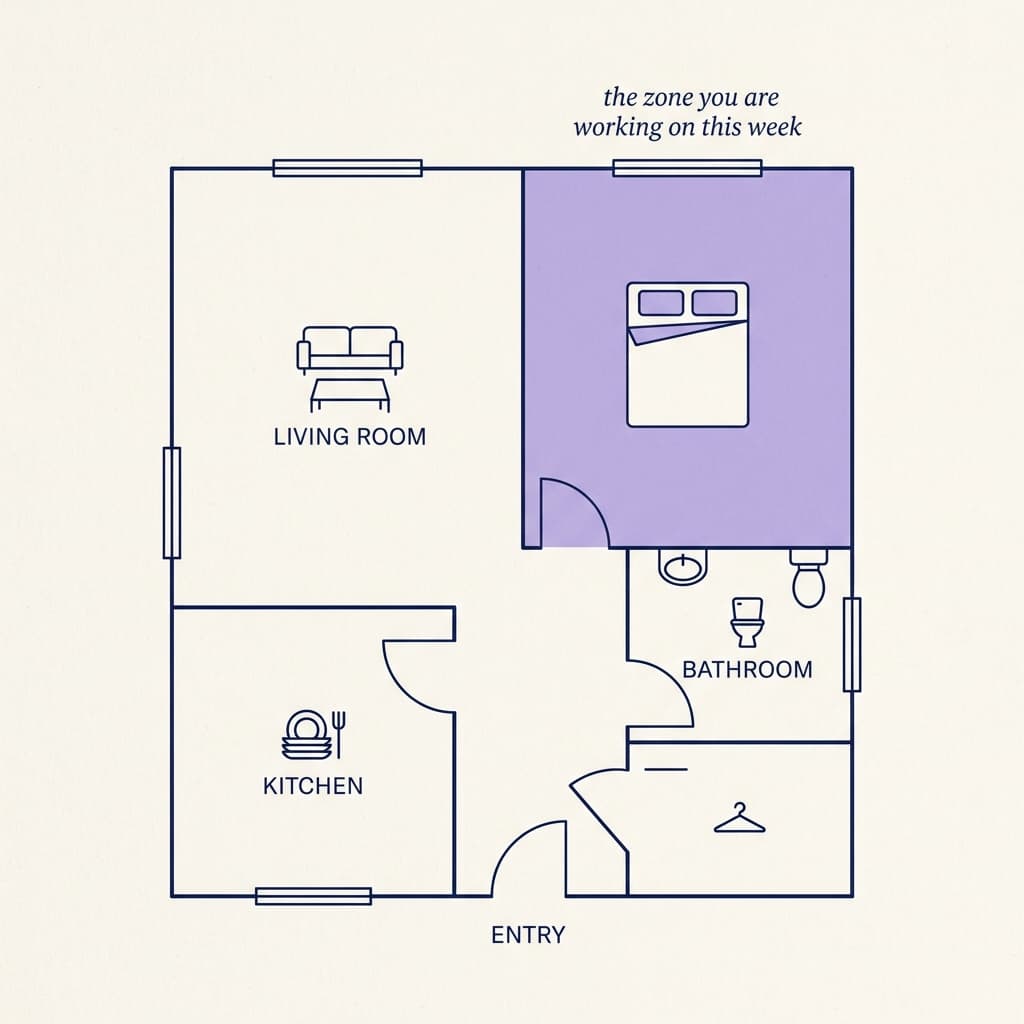
Pick one zone, not the whole house
Do not pull everything out of your closets. Pick one tiny area. A single drawer. One shelf. If you try to do the whole room, you will create a disaster. Need help picking a zone? Read our guide to doom pile cleaning.
The 20-minute rule
Set a timer for 20 minutes. When it goes off, you stop. No exceptions. Do not ride the hyperfocus wave until 3 AM. You will crash and never do it again.
Three piles only
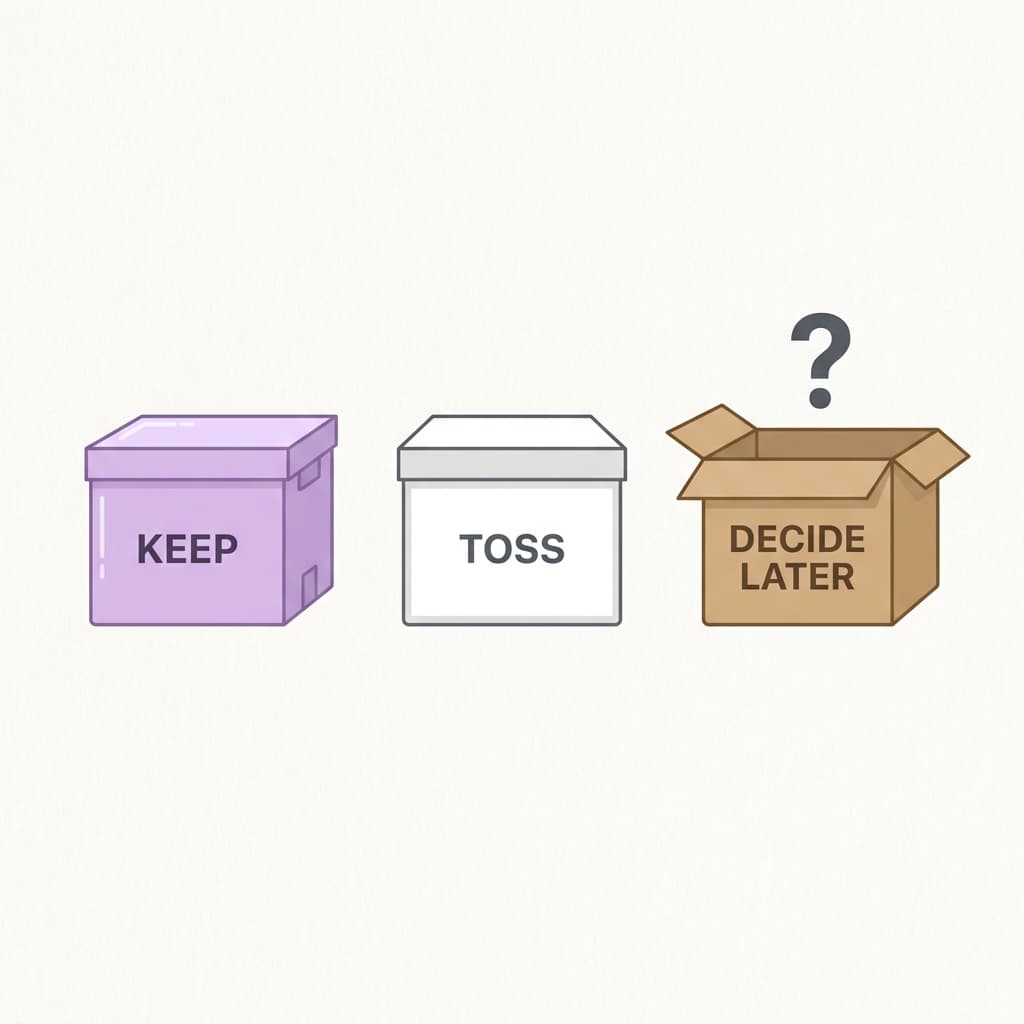
You only get three piles. Keep, Toss, and Decide Later. The Decide Later pile is not a failure. It is allowed to exist. It keeps the momentum going when your brain freezes.
The "would I buy this again?" test
Forget asking if an item sparks joy. Joy is too vague. Ask if you would buy it again today. If the answer is no, it goes in the Toss pile. It is much faster.
Stop. Don't try to finish today.
Once your 20 minutes are up, you are done. The loudest mess will still be there tomorrow. That is fine. Take the Toss pile to the trash. That is your minimum win. Walk away.
What to do with the "Decide Later" pile
The Decide Later pile is a trap for doom piles. You must contain it. Put the Decide Later pile in a box. Close the box. Label it with today's date.
Store the box somewhere out of sight. If you have not opened it in six months, take the whole box to donation. No shame. Do not open it to check what is inside. If you open it, you will keep everything. ADHD brains forget things in boxes exist. In this specific case, that is a feature, not a bug. See our doom pile cleaning guide for the deeper system.
What Swedish death cleaning doesn't fix
We need to be honest. This method is a tool. It is not a cure. It will not fix the underlying ADHD reasons your house gets cluttered. It does not cure object permanence issues. It does not fix time blindness. It does not stop dopamine-seeking purchases.
If you are currently paralyzed by the state of your house, read how to get out of ADHD paralysis first. The true fix for an ADHD home is recurring resets, not one massive death cleaning marathon.
How to make this a habit, not a project
This method only works if you do it consistently. Death cleaning is 15 minutes a week, not 15 hours a month.
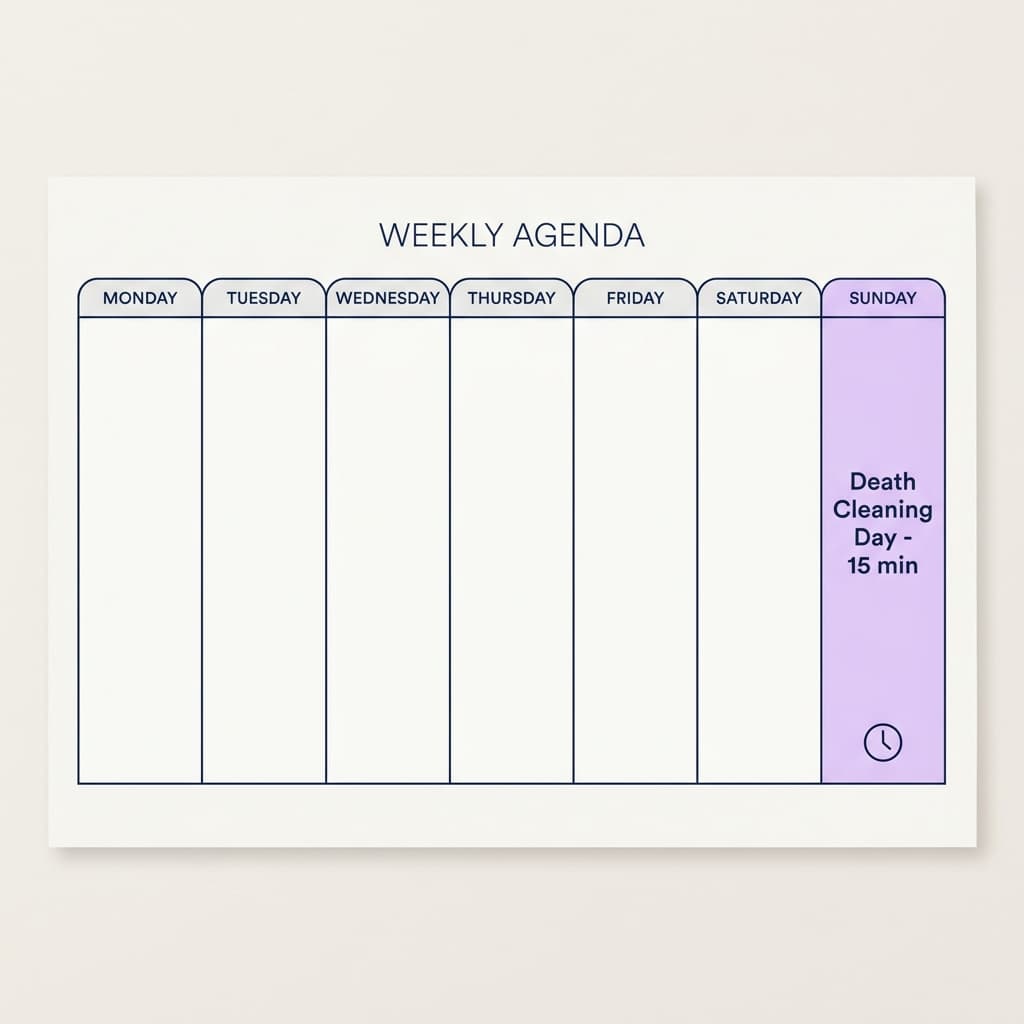
You have to schedule it. Pick a "death cleaning" day in your weekly routine. Do one zone. Then stop. If you miss a week, you miss a week. The next death cleaning day is still on the calendar. Our digital planner is built exactly for this rhythm. Add it to your weekly rotation and stick to the 20-minute rule.
Keep going
Pick your space, pick your energy, save your progress across seven days. No card required.
Common questions
The phone friendly planner is ready when you are.
Pick a room, check off tiny steps, save your progress. Free to try, one time payment to unlock everything.