Foundational
Object Permanence and ADHD (Why You Can't See the Mess You Live In)
You put a load of laundry in the washing machine. Two hours later you remember it exists, but only because you happened to walk past the laundry room. Three days later you find a sealed Tupperware container in the back of the fridge and have absolutely no idea who put it there.
It was you. The phrase "out of sight, out of mind" was invented for ADHD brains, even though they did not know that at the time. This is what people call ADHD object permanence. Whether or not that is the technically correct term, the experience is incredibly real, and your house is paying the price for it.
What people mean by "ADHD object permanence"
When people with ADHD talk about object permanence, they mean a very specific phenomenon. Things you cannot see simply stop existing in your active mind.
The term itself comes from child psychology. A baby does not understand that a toy hidden under a blanket still exists. Clinical psychologists will quickly point out that adults with ADHD do not actually lack object permanence. They argue that you have working memory and prospective memory challenges instead. They will tell you that you know the laundry exists, you just cannot hold it in your active working memory.
They are technically right. However, that argument does not matter to the person whose entire wardrobe is currently sitting in a chair. The medical label is irrelevant when you are trying to find your car keys for the third time today. We use this term because it perfectly describes the daily experience. It gives us an understanding that bends instead of breaks under the pressure of real life. You do not have a broken brain. You have a different operating system that requires a different set of rules.
Why this makes your house messy specifically
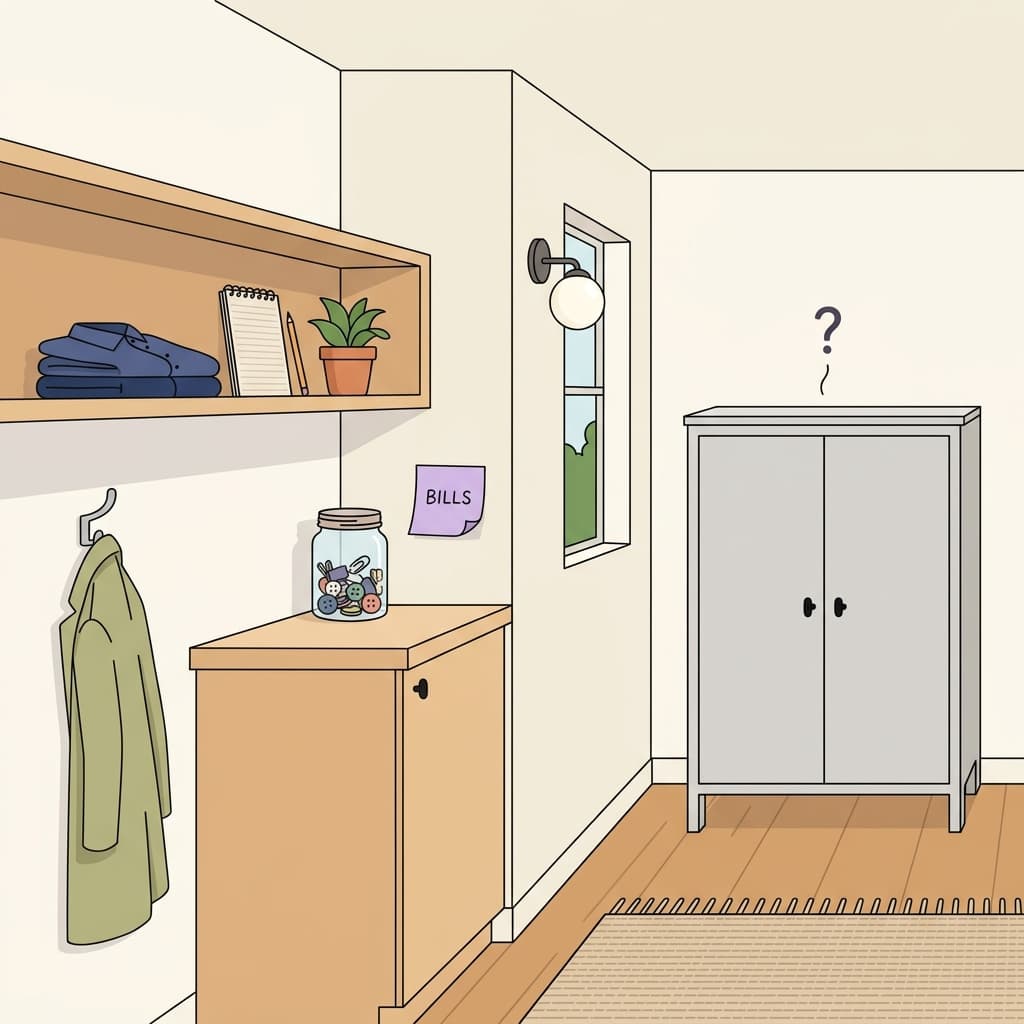
This specific mechanism is exactly why your house gets so messy. The "doom pile" exists because your brain literally edits it out of the room. Once a pile sits on the dining table for more than two days, it becomes part of the table. You stop seeing it.
The dirty dishes in the sink stop being visible. The laundry on the floor becomes part of the floor. This is not laziness. Your brain is doing exactly what it is wired to do. It is filtering out stable, unchanging visual information so you can focus on what is changing in your environment.
Most people get useful, internal prompts from their brain. Their brain says, "Did you put away the dishes?" ADHD brains do not get those internal prompts. You rely entirely on external prompts. If the dishes are hidden inside the dishwasher, they do not exist. If the bills are in a closed drawer, they do not exist. You cannot clean a mess that your brain refuses to acknowledge. See our guide on doom pile cleaning for exactly how this plays out on your counters.
Why visible storage isn't a crutch, it's the correct interface
Standard organizing advice tells you that your house should look like a magazine. You are told to use closed cabinets, hidden drawers, and opaque baskets with lids. These are visual hiding mechanisms. They are designed for neurotypical brains that want to hide their belongings.
ADHD brains need the exact opposite. You need open shelves. You need clear bins. You need your daily items hanging on hooks where you can see them.
Ignore them when they tell you to hide everything in drawers. Hiding your items is a guaranteed way to lose them forever. Leaving things out in the open is not a failure to look adult. Visible storage is not a crutch. It is a correctly configured user interface for how your brain actually works. When the loudest mess is finally visible, you can actually deal with it.
The five systems that work with ADHD object permanence
You cannot train yourself to remember things hidden in drawers. Stop trying. Build these five physical systems instead.
Clear bins, not opaque ones
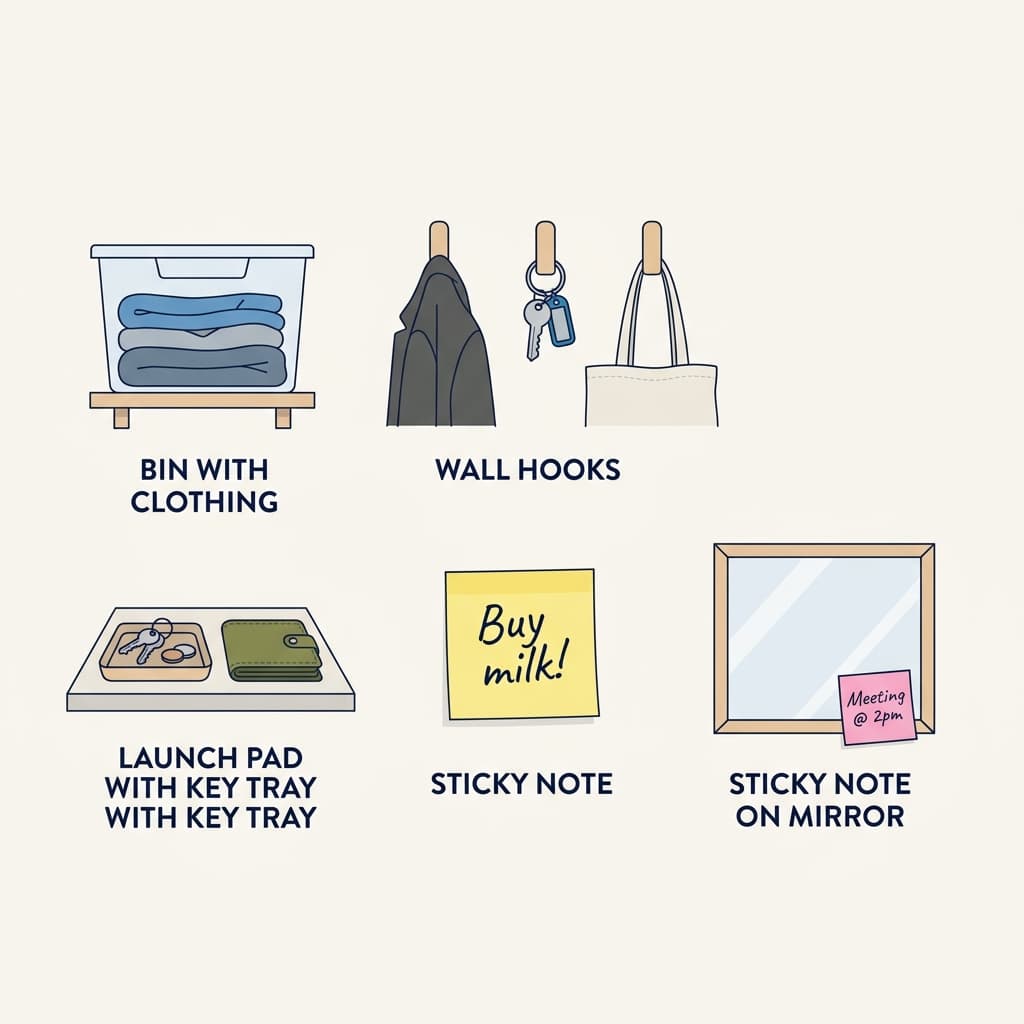
You will immediately forget what is inside any opaque container. Do not buy them. Buy clear plastic bins, clear food storage containers, and mesh laundry bags. If you cannot see it through the plastic, it does not exist.
Hooks, not closets
Hang your most-used daily items on hooks. Put your coats on a hook by the door. Put your keys on a hook. Hang your headphones on a hook next to your desk. If an item goes into a dark closet on a hanger, you will forget you own it.
The "launch pad" by your front door
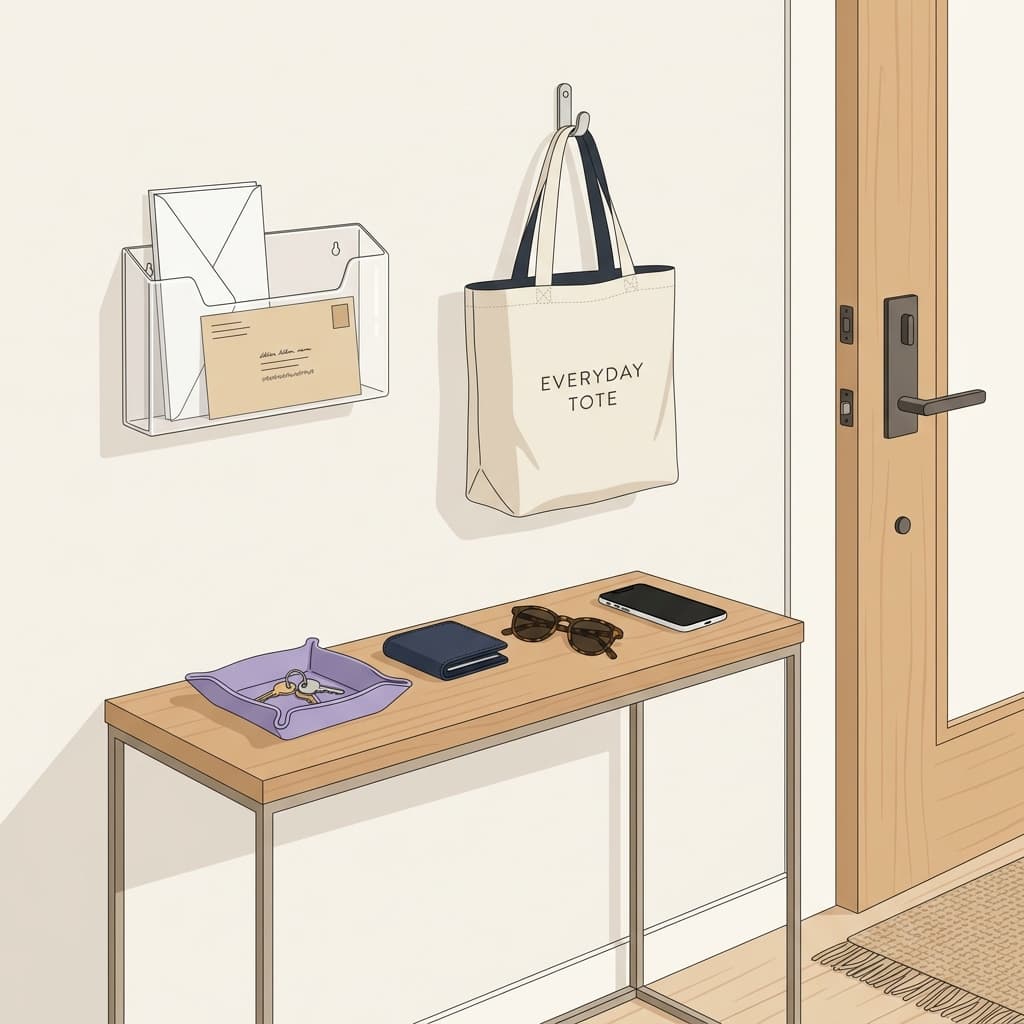
Create a single visible surface near your front door. This is your launch pad. It holds your keys, wallet, phone, and sunglasses. Everything that leaves the house lives here. If something is not sitting on the launch pad, you do not have it.
Sticky notes for invisible deadlines
Bills, medical appointments, and prescription refills all exist in the future. Anything in the future is completely invisible to your brain right now. Write the deadline on a physical sticky note. Put the note exactly where you will physically see it tomorrow morning.
One visible chore reminder, not a checklist app buried on your phone
The expensive to-do list app you have to unlock your phone to see is completely invisible. The single, bright sticky note stuck to your bathroom mirror is not. Pick one reminder system. Make sure it is physically visible in your daily path.
What doesn't work (and why everyone keeps recommending it)
You will see standard organizing advice everywhere. It fails ADHD brains immediately.
Matching opaque storage bins look incredibly aesthetic. They also hide everything perfectly, ensuring you never use those items again. Drawer organizers assume you will actually open the drawer. You won't. Out of sight means gone. Color-coded file folders work for exactly one week before you stop reading the labels.
The classic "junk drawer" is the worst offender. For an ADHD brain, every single hidden drawer eventually becomes a junk drawer. Folded clothes in dressers are useless because you only wear the shirts you can see on top of the pile. Acknowledge that this is genuinely good advice for neurotypical brains. It is just terrible advice for yours.
How to plan around it instead of fighting it
This requires a massive mental shift. You cannot train yourself out of this. Adults with ADHD have spent decades trying to force themselves to remember things in drawers. It never works.
The fix is not better discipline. The fix is a completely different home setup. You must plan your house around the strict assumption that anything you cannot see does not exist for you. Our digital planner is built entirely around this principle. It relies on highly visible daily tasks, with zero buried calendar items. Stop fighting your operating system. Work with it. Your brain is not the problem. The drawer is the problem.
When this gets harder
We need to be honest about reality. Object permanence issues get significantly worse under stress. They get worse with sleep deprivation, hormonal shifts, and major life transitions.
If you went from managing your house okay to living in a giant doom pile in six weeks, this is probably why. Your executive function is tapped out. See our guide on how to get out of ADHD paralysis. The fix is not pushing yourself harder. The fix is aggressively reducing the number of surfaces and invisible tasks your brain has to manage.
Keep going
Pick your space, pick your energy, save your progress across seven days. No card required.
Common questions
The phone friendly planner is ready when you are.
Pick a room, check off tiny steps, save your progress. Free to try, one time payment to unlock everything.